Call Us: +1 603 406 7660
Call Us: +1 603 406 7660

You might like
Couldn't load pickup availability
✅ 1-Year Free Warranty & Long-Term After-Sales Support
✅ 30-Day Free Trial & Free No-Hassle Returns
✅ Worldwide Free Shipping, Zero Tax & No Extra Fees
✅ Local Shipping in 24H | 2-8 Business Days Fast Delivery
✅ Factory Direct Price | OEM & ODM Customizable
✅ Clinically Proven Results, Free Training & Therapy Protocols
Product Type:Portable Light Relief Therapy Device
Primary Applications:Lips and Mouth
Red-Light Wavelength:660nm
Near-Infrared Wavelength:850nm
Listed Power / Intensity:1200–1500mW/cm²
Light Source:2-in-1 LED
Number of LED Beads:1 Piece
Working Modes:Continuous / Pulsed / Gradual Intensity
Battery Capacity:2200mAh
Working Voltage:AC 110–220V, 50/60Hz
Power Source:Rechargeable Battery and Power Adapter
Treatment Head:360° Rotatable
Applicator Design:Detachable Light-Guide Column
Colour:Black
Intended Users:Men, Women and Unisex
Features:Practical, Portable and Adjustable
Manufacturer Warranty:1 Year


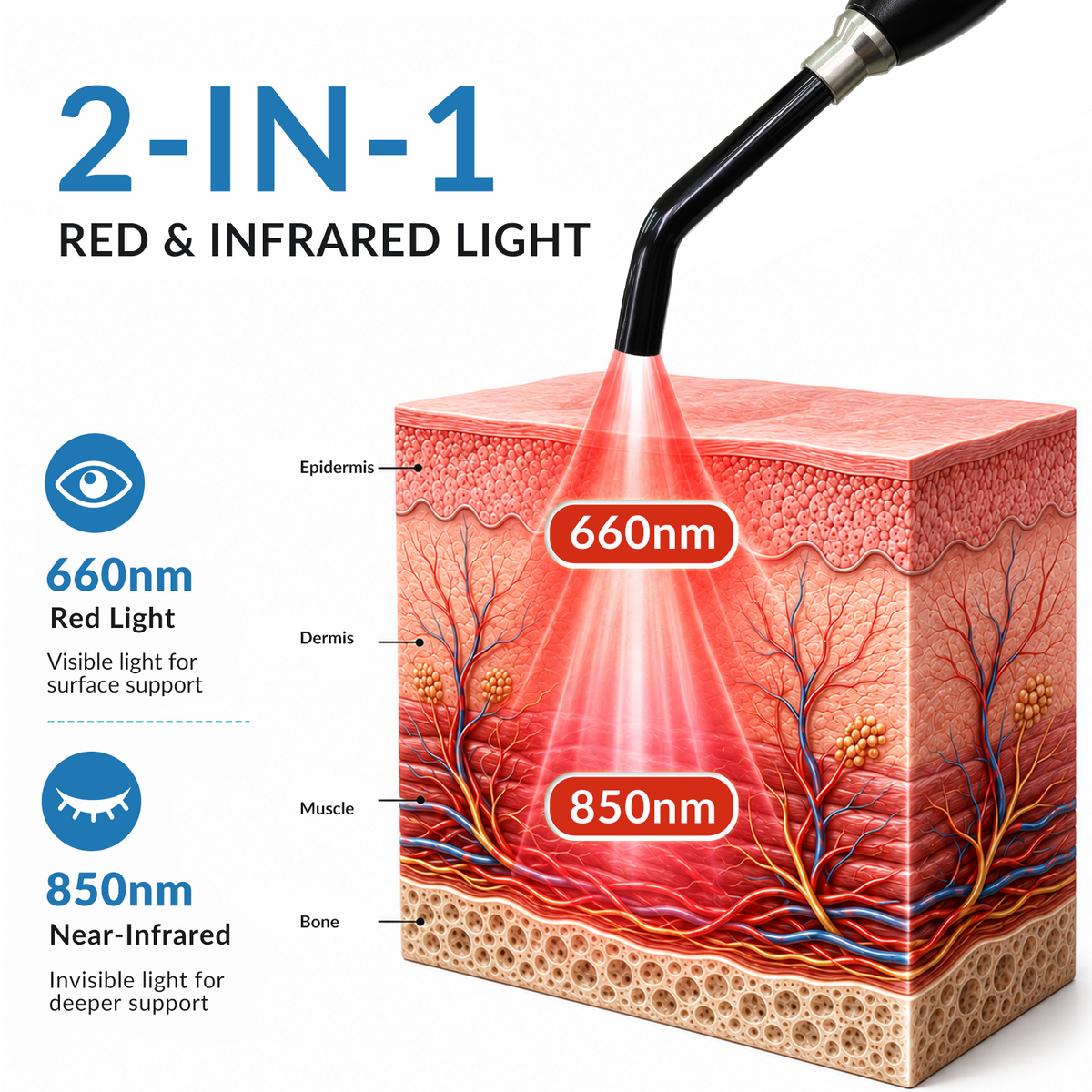


Targeted dual-wavelength light technology combined with flexible operating modes and a compact cordless design.
The combination of red and near-infrared light targets different tissue depths during the same session.
The product page lists an output of 1200–1500mW/cm², concentrating the light over a small treatment area instead of distributing it across a large panel.
Three operating options provide greater flexibility than a basic single-mode light device.
The front light-guide column can be separated from the operating handle for easier maintenance and more convenient daily use.
The adjustable treatment head rotates through 360 degrees, helping users position the light more comfortably and accurately around different oral areas.
Flexible positioning for targeted oral-area access.
The built-in rechargeable battery supports cordless operation, reducing the need to remain close to a wall outlet during use.
The included charging dock provides a fixed place to recharge and store the device between sessions, helping keep the treatment area organized.
The compact handheld format is easy to carry, store and position for targeted personal care in different environments.
The device applies external light without needles, cutting or direct application of medication.
It can be used as a supportive option alongside an appropriate oral-care plan.
A practical combination of dual-wavelength technology, adjustable operating modes and cordless convenience.

Cold sores are usually associated with oral herpes caused by HSV-1 and commonly appear as blisters or sores on or around the lips. They are different from canker sores and can be contagious.
Canker sores, also called aphthous ulcers, are painful open sores that occur inside the mouth. They are not the same as cold sores and are not typically caused by the herpes virus.
Mouth ulcers can have many different causes, so persistent or unusual sores should not automatically be assumed to be simple canker sores.
Dry or cracked lip areas
Corners of the mouth
Minor surface irritation
Small areas of redness
Localized tissue discomfort
Oral Mucositis Support




